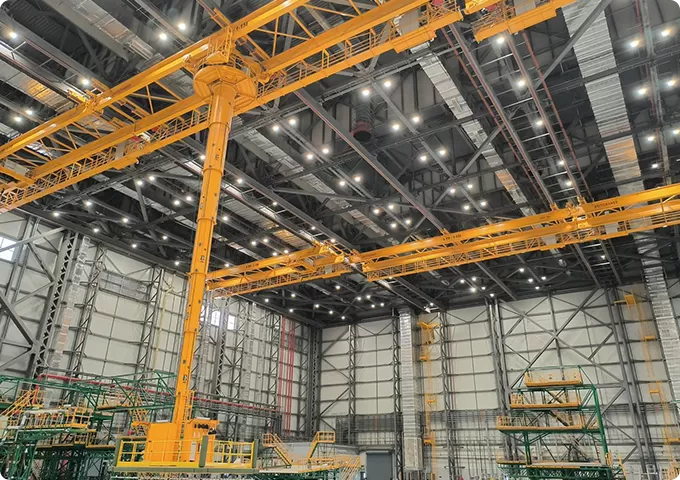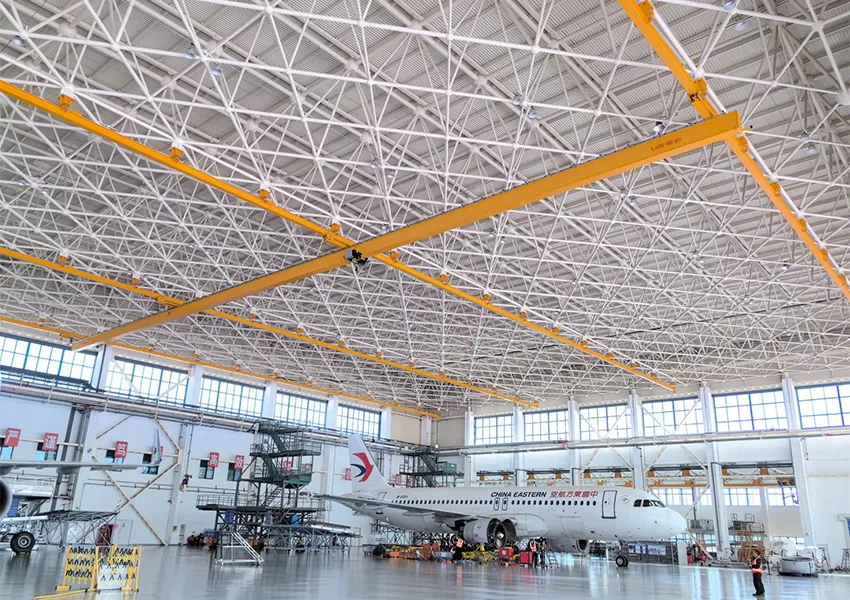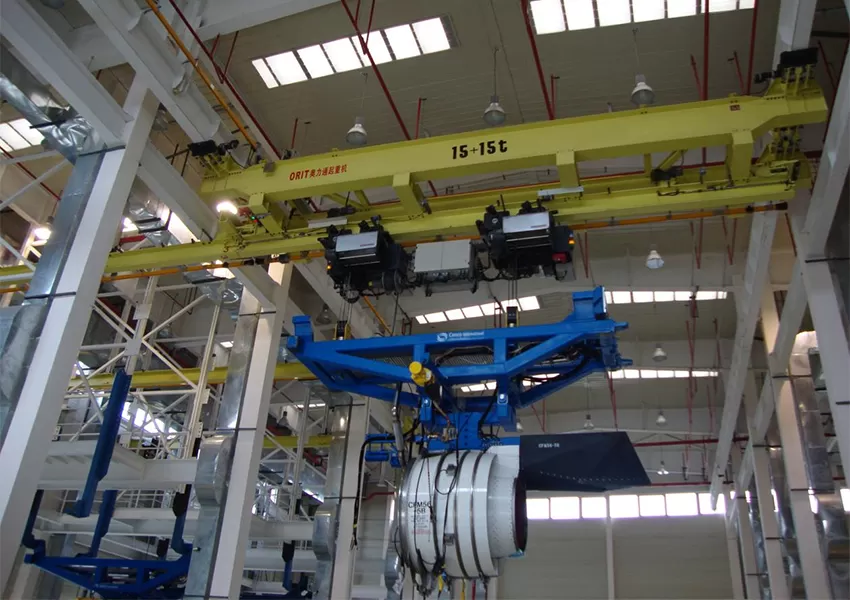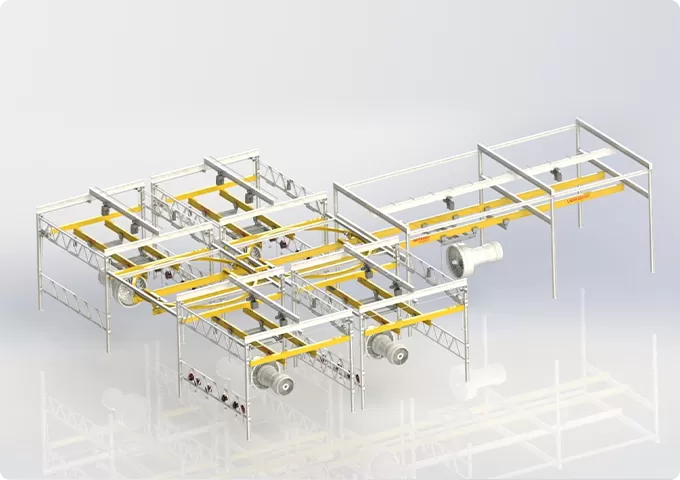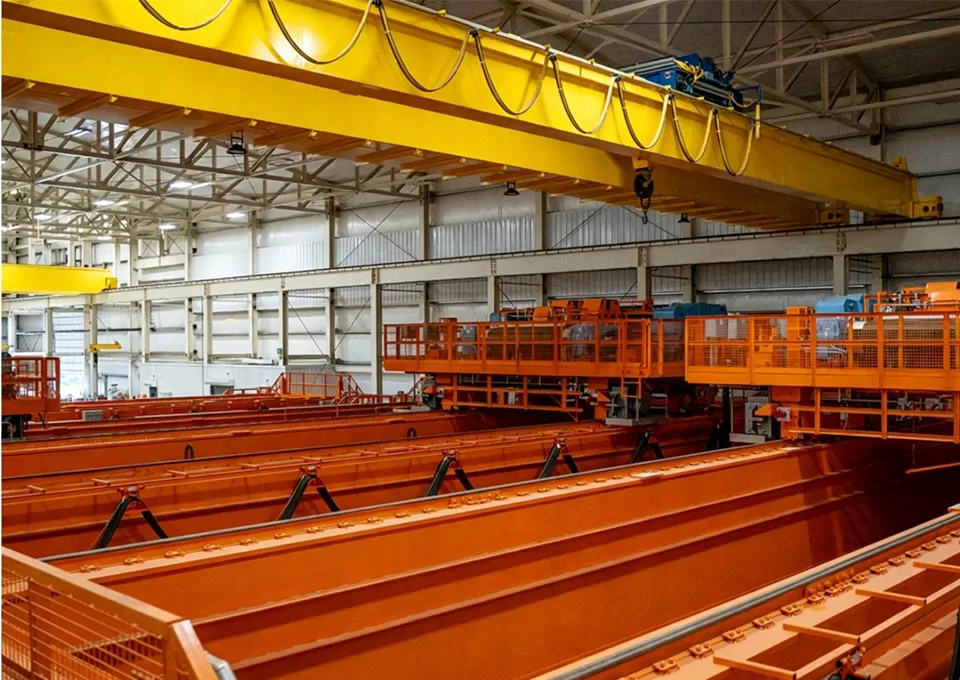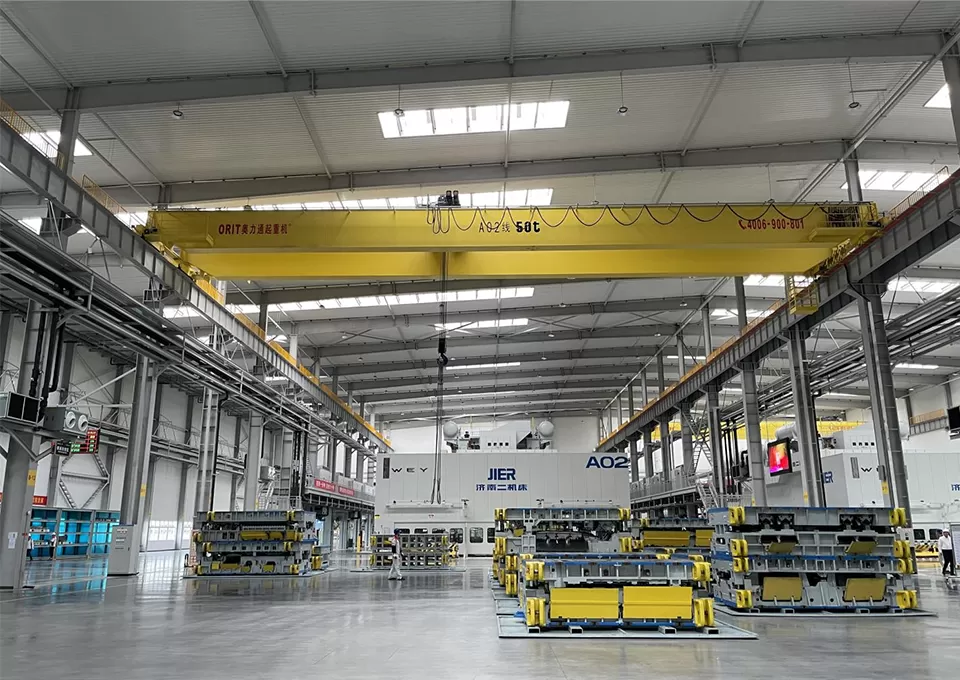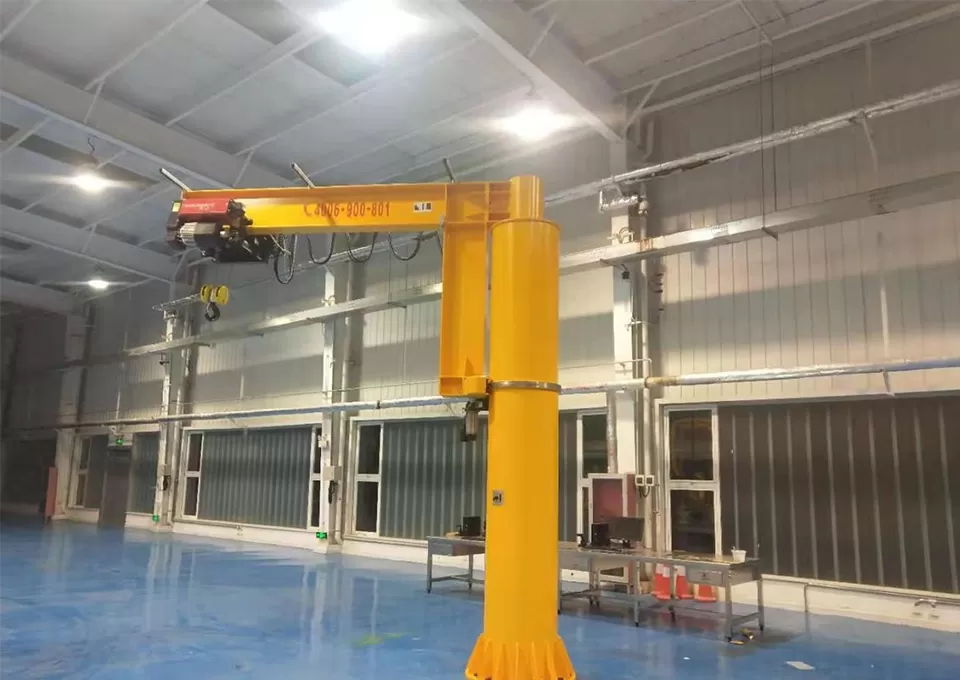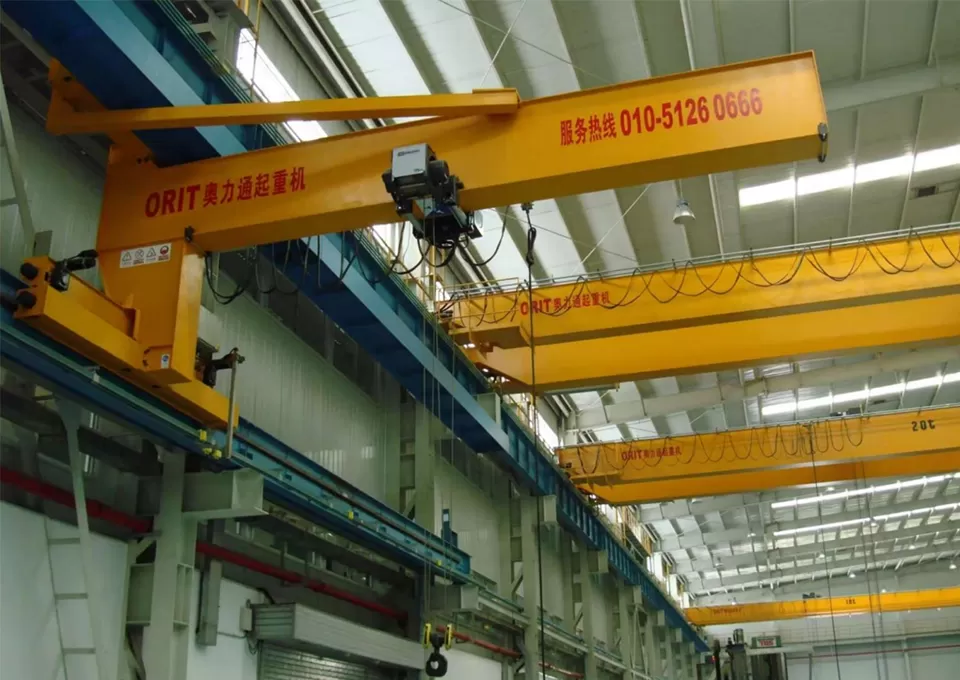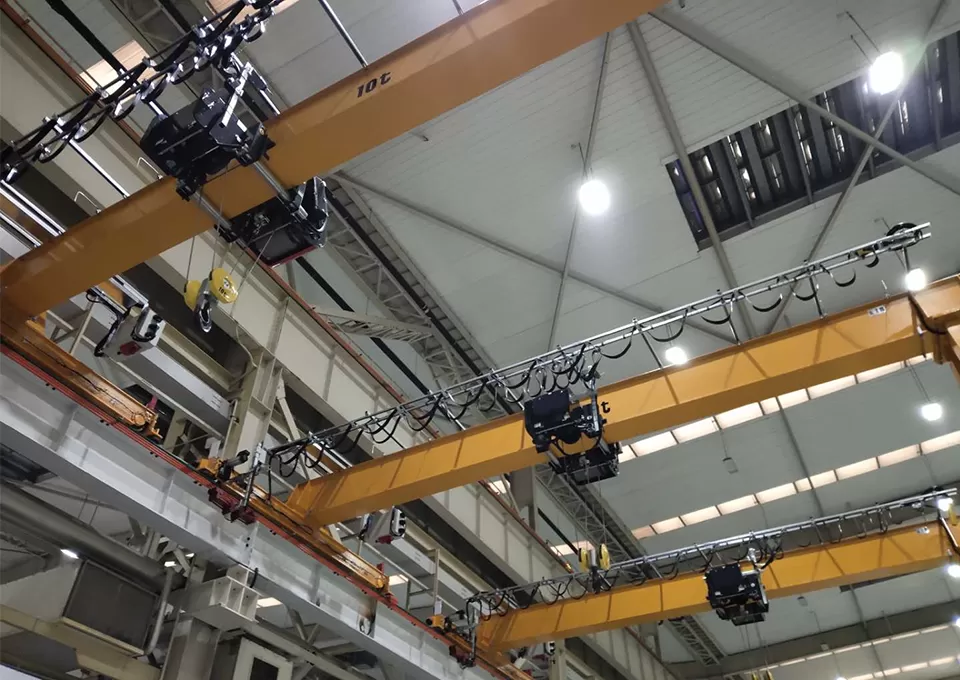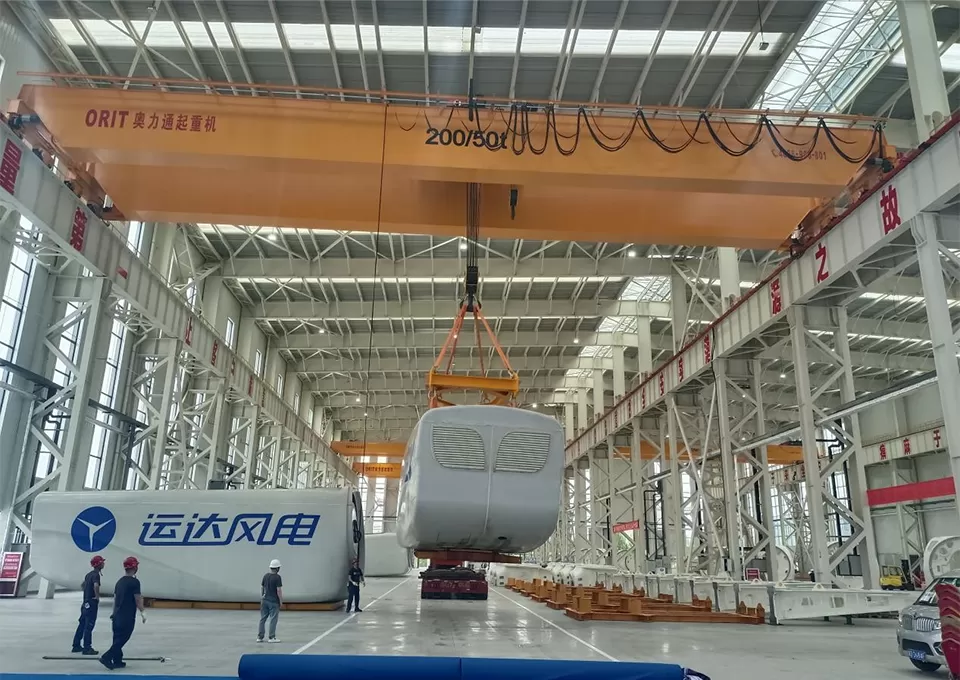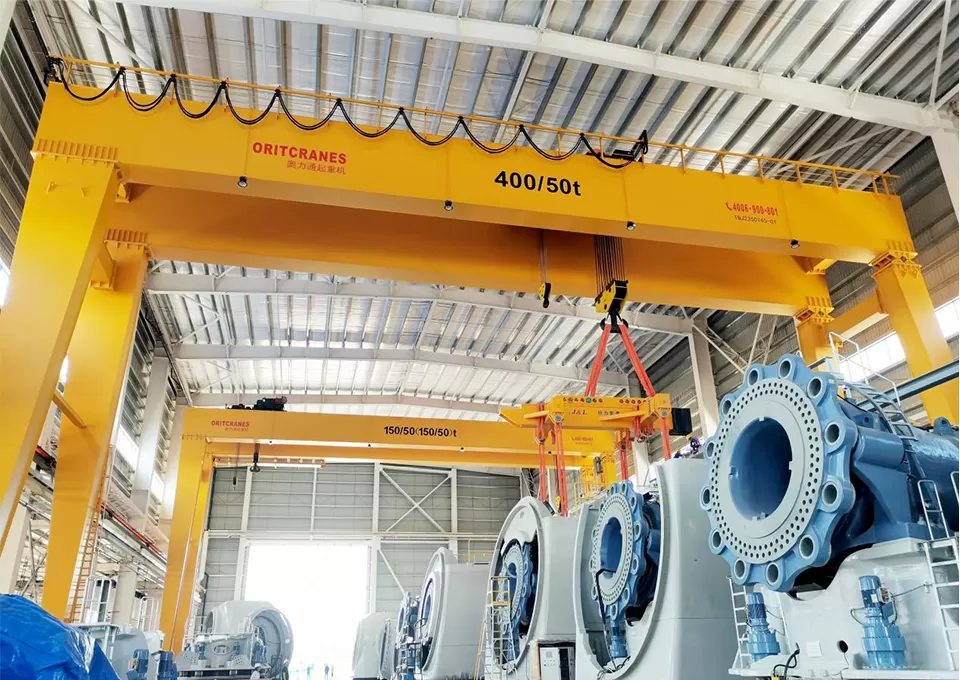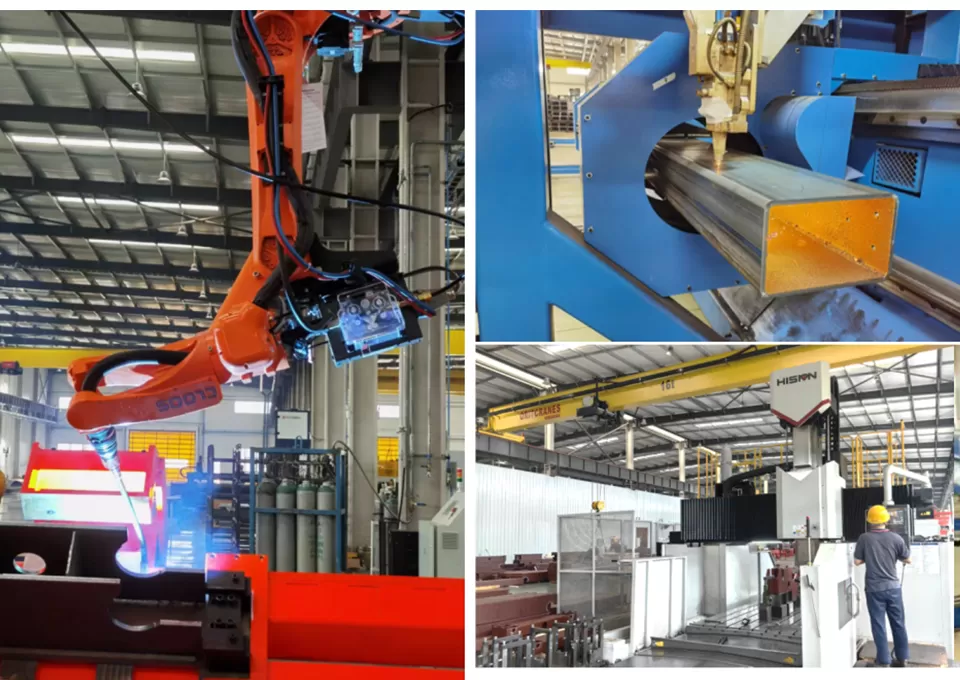
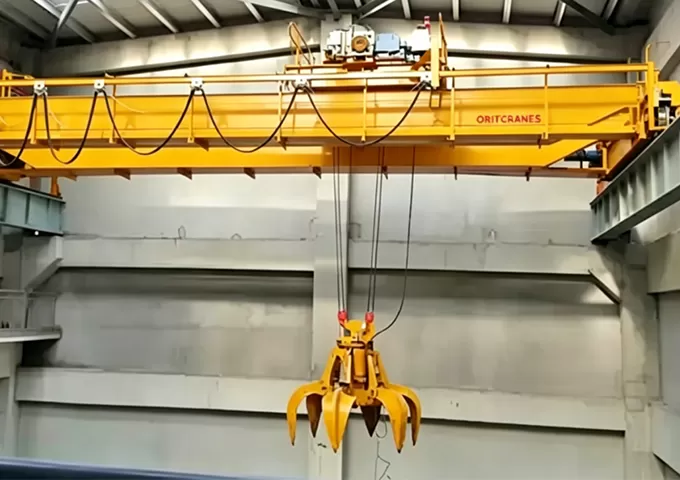
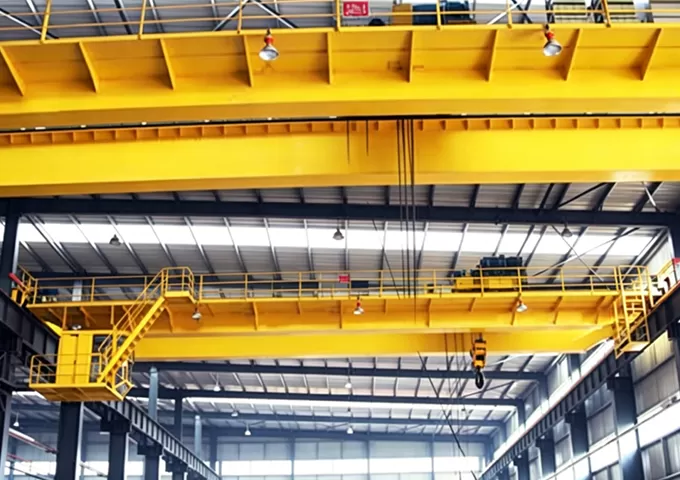
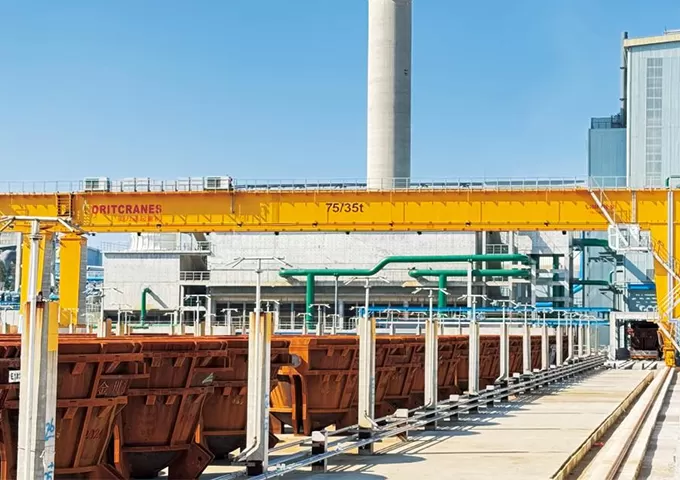
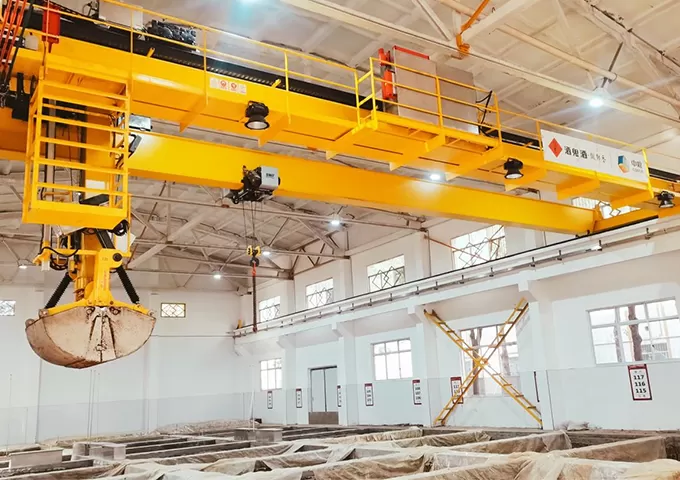
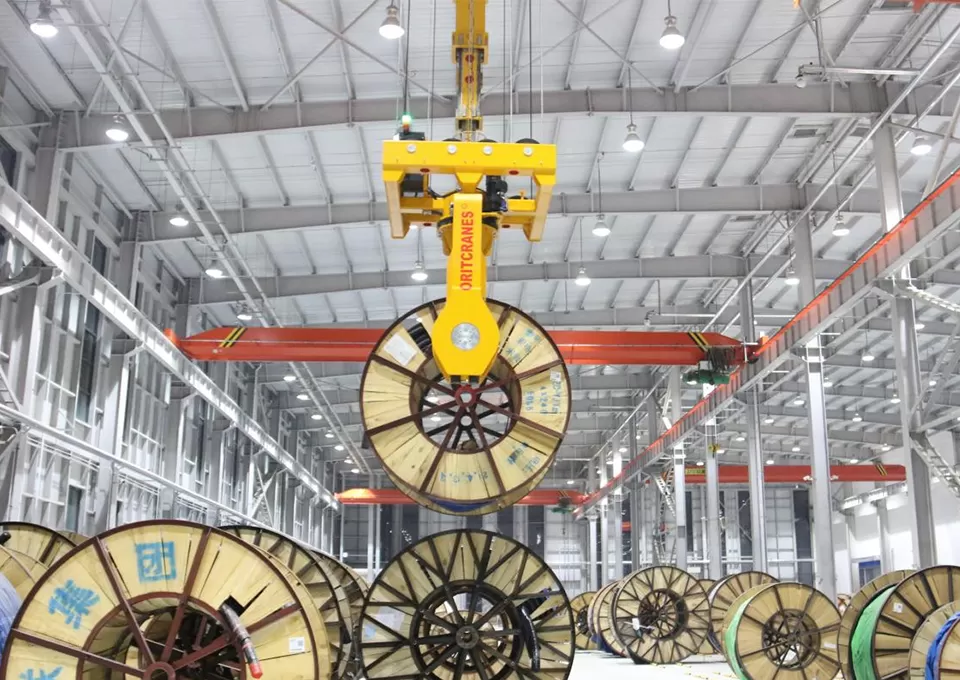
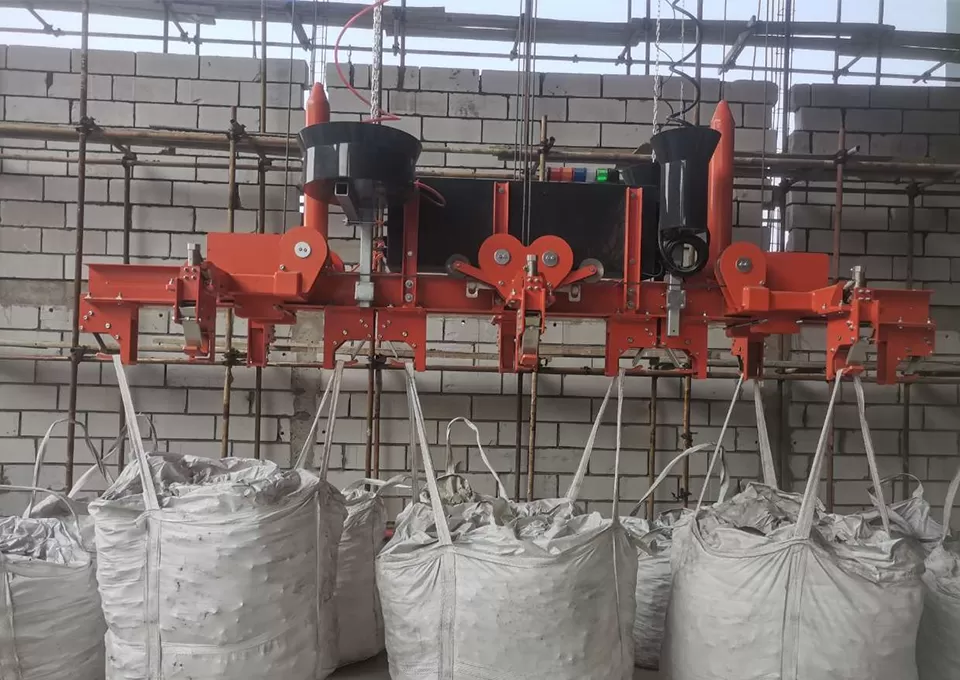
In aircraft MRO, crane safety depends on more than lifting capacity. When handling engines, landing gear, APUs, tooling, or other high-value components close to an aircraft, the crane must control where the load travels, how much it swings, and how accurately it stops. For modern hangars, anti-collision protection, anti-sway control, precision positioning, and disciplined crane maintenance should work as one integrated safety system.
Aircraft hangars have restricted operating envelopes. A suspended engine may need to travel close to an aircraft fuselage, maintenance platform, hangar structure, another crane, or fixed equipment.
Anti-collision systems help manage these risks by monitoring crane position and establishing controlled travel zones. Depending on the crane design, the system can use position feedback, sensors and control logic to warn the operator, reduce travel speed, or stop movement before the crane enters a restricted area.
For aircraft MRO operations, effective anti-collision protection should consider:
Crane-to-crane interference in shared runways
Aircraft fuselage, wing and tail clearance
Maintenance platforms and fixed infrastructure
Hoist upper/lower travel limits
Predefined restricted or no-entry zones
Safe stopping distance at different travel speeds
The objective is not simply to stop a collision. A well-designed system should slow the movement smoothly before the load reaches a critical area, helping avoid sudden braking that could create additional load swing.
Suspended loads naturally behave like pendulums. Rapid acceleration, braking or changes in travel direction can increase load sway, making accurate component installation difficult.
Modern anti-sway systems reduce this movement by controlling crane acceleration and deceleration. Advanced systems can continuously adjust trolley or bridge motion to damp load oscillation, improving both positioning accuracy and operational safety.
This is particularly valuable when handling:
Aircraft engines and engine modules
Landing gear assemblies
APUs
Large tooling and fixtures
Sensitive aviation components
Reducing sway also shortens the time operators spend waiting for a suspended load to stabilize before final positioning.
Precision positioning becomes critical during the final stage of an MRO lift.
High travel speed may be useful when transporting a component across the hangar, but installation near the aircraft requires smooth, low-speed movement. Frequency-controlled drives, position feedback and fine-motion control allow the operator to transition from normal travel to carefully controlled positioning.
There is no universal positioning tolerance suitable for every aircraft MRO task. The required accuracy should be determined by the component, lifting fixture, installation procedure and available clearances.
ORITCRANES' aircraft hangar crane solutions combine variable-frequency control with anti-sway technology to support stable movement and accurate positioning in large-span MRO environments. Its aircraft engine handling systems also incorporate anti-sway, overload protection and precision positioning functions.
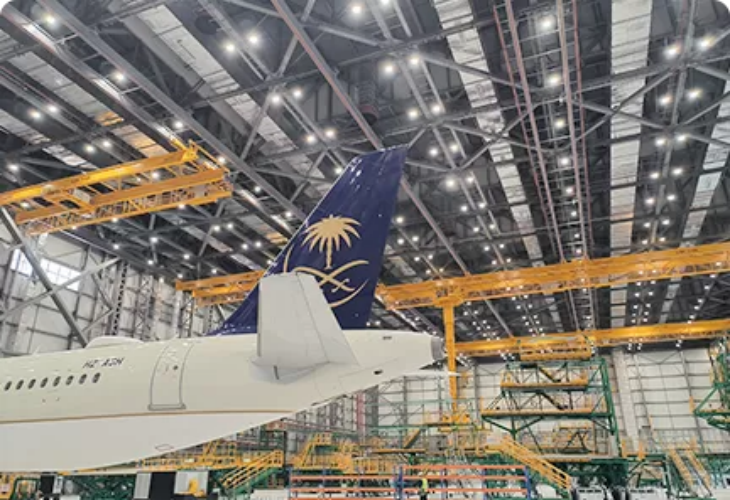
For demanding aviation maintenance applications, safety should be engineered in layers rather than depending on one device.
A suitable crane system may integrate anti-collision control, anti-sway functions, overload protection, travel and hoisting limits, emergency stops, controlled low-speed motion and position monitoring.
The control strategy should also match the hangar workflow. Engine removal, component transfer and final installation have different motion profiles and risk zones, so the crane configuration should be designed around the actual maintenance process.
Inspection frequency should follow applicable regulations, manufacturer requirements, crane duty class, operating conditions and the facility's own safety procedures.
For overhead and gantry cranes covered by OSHA 29 CFR 1910.179, inspections are classified as frequent and periodic. OSHA defines frequent inspection intervals from daily to monthly and periodic inspections from 1 to 12 months, depending on service conditions. Critical items include operating mechanisms, hooks, hoist chains and other safety-related components.
For an intelligent MRO crane, crane maintenance should also include verification of:
Anti-collision sensors and safety zones
Encoders and positioning devices
Brakes and limit switches
Wire ropes, hooks and lifting attachments
Anti-sway system performance
Variable-frequency drives and control parameters
Emergency stops and safety interlocks
A safety feature that is installed but poorly calibrated or maintained should not be treated as reliable protection.
Aircraft MRO lifting requires controlled movement around extremely valuable assets. Anti-collision systems help keep the crane away from hazardous zones, anti-sway control stabilizes suspended loads, and precision positioning enables safe final alignment of engines and other sensitive components.
For MRO operators planning a new hangar or upgrading an existing lifting system, crane safety and crane maintenance should therefore be considered together from the design stage—not added only after commissioning.
A properly engineered aircraft crane system can improve safety while also reducing positioning time, operator workload and risk of component damage.
It monitors crane movement and helps prevent the crane or suspended load from entering defined collision or restricted zones.
It controls acceleration and deceleration—and, in advanced systems, actively adjusts crane motion—to reduce suspended-load oscillation.
It allows engines and sensitive components to approach installation points slowly and accurately, reducing impact and alignment risks.
No. It supports the operator but does not replace proper training, lifting procedures or risk assessment.
Regular maintenance confirms that brakes, sensors, limit switches, encoders, anti-collision functions and other protective systems remain operational and correctly calibrated.